What Every Pakistani Needs to Know
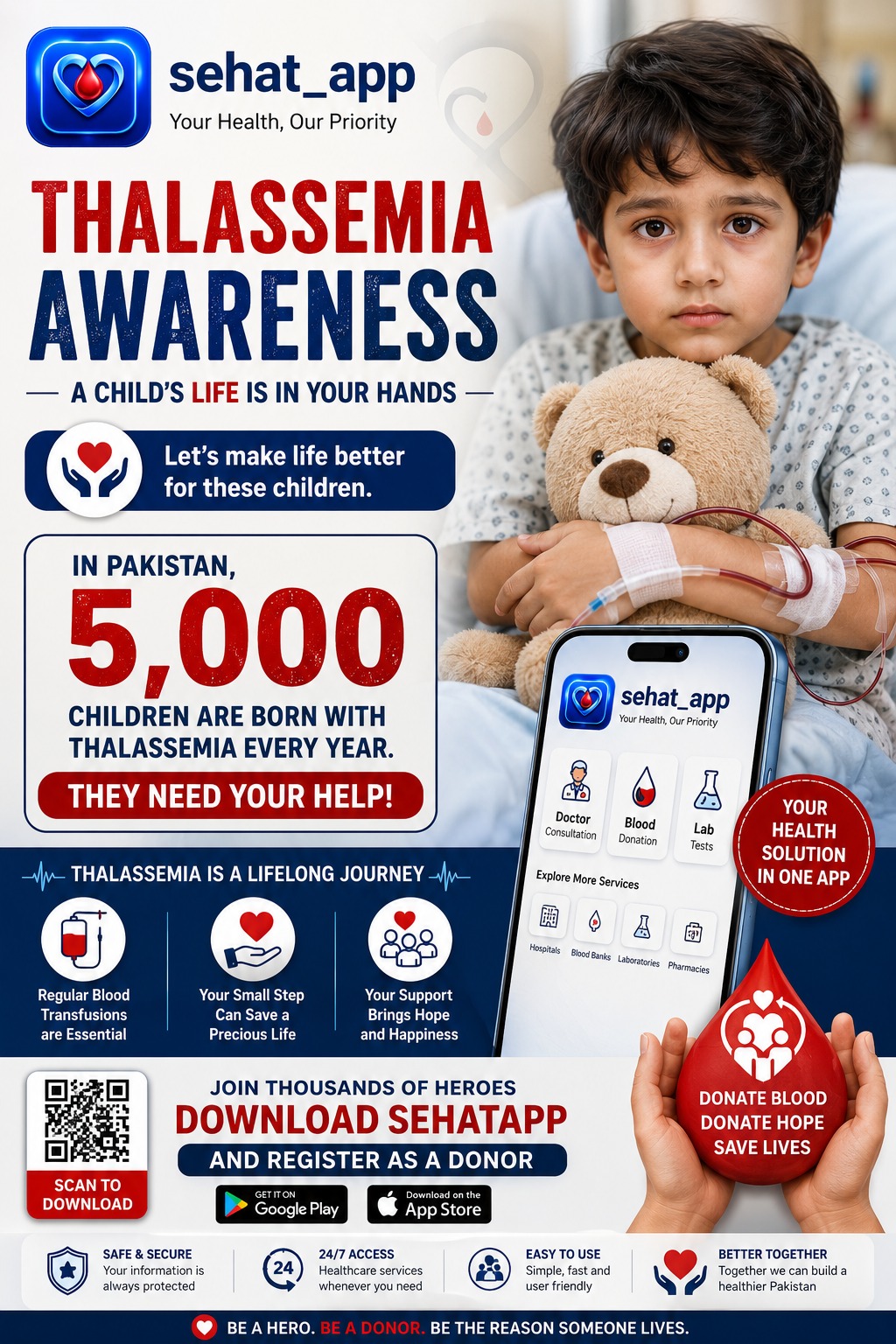
What is Thalassemia?
Thalassemia is a genetic blood disorder passed from parents to children. It affects the body's ability to produce hemoglobin – the protein in red blood cells that carries oxygen throughout the body.
Think of hemoglobin as a delivery truck. In a healthy person, there are plenty of trucks delivering oxygen to every organ. But in a Thalassemia patient, the body doesn't make enough trucks – or the trucks it makes don't work properly.
Without enough healthy red blood cells, the body's organs don't get the oxygen they need. This leads to fatigue, weakness, pale skin, slow growth, and eventually – organ failure.
Thalassemia Major is the most severe form. Children with this condition are dependent on regular blood transfusions for their entire lives. Without these transfusions, their organs slowly shut down.
The Reality in Pakistan
Pakistan has one of the highest rates of Thalassemia in the world. The numbers are heartbreaking:
| Statistic Number | |
| New Thalassemia children born every year | 5,000 |
| Children currently living with Thalassemia Major | 100,000+ |
| Transfusions each child needs per year | 18+ |
| Children who don't receive enough blood on time | 60% |
These aren't just numbers. They are children like Ayesha (7), Bilal (5), and Fatima (9). Each one waits for a stranger to care enough to walk into a donation center. Each one dreams of playing outside, growing tall, and having a future.
Why Do So Many Children in Pakistan Have Thalassemia?
Thalassemia is a genetic disorder. It is passed from parents to children when both parents carry the Thalassemia trait (minor form).
Here's how it works:
- If both parents are carriers (healthy but with the trait), there is a 25% chance their child will have Thalassemia Major.
- In Pakistan, it's estimated that 5-8% of the population are carriers – that's over 10 million people.
- Consanguineous marriages (marriages between cousins) are common in Pakistan. This increases the risk of both parents carrying the same genetic mutation.
The good news? Thalassemia is preventable with proper awareness, genetic testing, and carrier screening before marriage.
How Can Thalassemia Be Prevented?
Step 1: Awareness
Many people don't know they are carriers because they have no symptoms. Simple blood tests can detect the Thalassemia trait.
Step 2: Genetic Testing & Counseling
Couples planning to marry can get tested. If both are carriers, they can make informed decisions and seek medical guidance.
Step 3: Prenatal Testing
Pregnant women at risk can have their baby tested during pregnancy. This allows for early intervention and preparation.
The goal is not to stop marriages – it's to prevent suffering by making informed choices.
How Can You Help Today?
While prevention is the long-term solution, the immediate crisis is blood shortage. Thousands of children are waiting for blood right now.
Here's how YOU can help:
| ActionWhat to Do | |
| Donate Blood | Find a patient near you on Sehatapp and donate. It takes 30 minutes. |
| Register as a Donor | Download the Sehatapp app and sign up today. |
| Spread Awareness | Share this post with your family and friends. |
| Encourage Testing | Talk to your family about Thalassemia carrier testing. |
A Message from Sehatapp.org
At Sehatapp.org we believe that no child should die waiting for blood. Our platform connects donors directly with patients who urgently need their blood type. With over 12,400+ registered donors and 2,847 lives saved, we are making a difference – but we need more heroes.
Will you be one of them?
"I never thought one hour of my time could mean the difference between life and death for someone's child. When I saw Ayesha's photo and read that my blood kept her alive another month – I cried. I'll donate every single time I can."
— Ahmed Raza, Blood Donor, Karachi
Take Action Today
Download Sehatapp.org and register as a blood donor. Your 30 minutes can give a child another month, another year, another chance at life.
Visit: sehatapp.org
Call: 0304-2529111