Understanding Blood Banks – Save Lives, Strengthen Pakistan
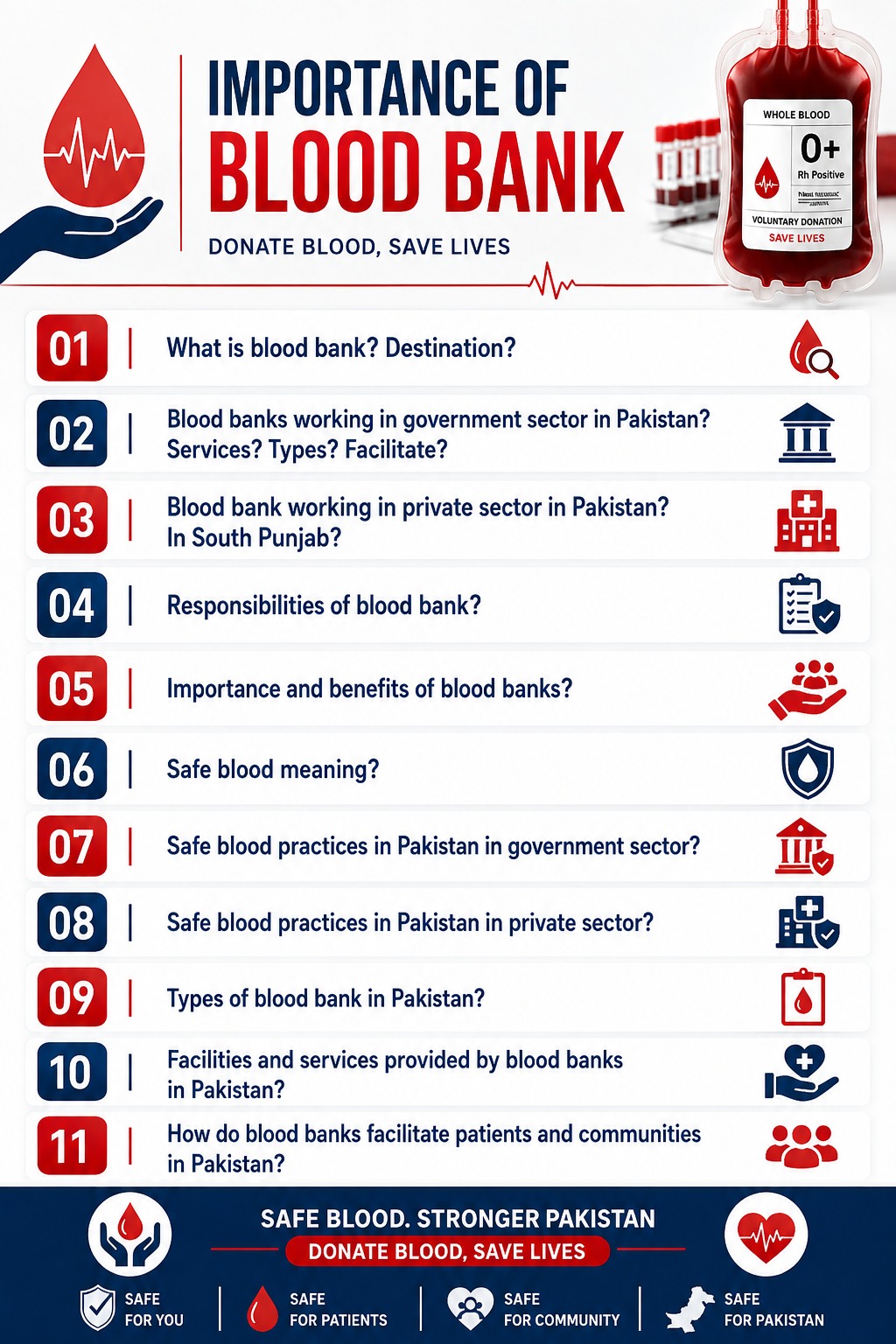
01:A blood bank is a medical facility that collects, tests, processes, stores, and distributes blood and blood components for transfusions and medical use.
02:Government blood banks in Pakistan operate under organizations like Safe Blood Transfusion Services (SBTS) and Pakistan Red Crescent. They provide free or subsidized blood, ensure basic screening, and facilitate emergency transfusions in public hospitals. Types include hospital-based and regional/central blood banks.
03:Private blood banks in Pakistan include Hussaini Blood Bank, Fatimid Foundation, and Chughtai Lab Blood Bank. In South Punjab, private banks operate in cities like Multan, Dera Ghazi Khan, and Bahawalpur, offering paid and replacement donations with additional facilities like home sample pickup.
04:Responsibilities include collecting blood, screening for infections (HIV, Hepatitis B/C, Syphilis, Malaria), blood grouping, cross-matching, safe storage, maintaining records, ensuring timely supply, and promoting voluntary donations.
0:Importance: Saves lives in emergencies, surgeries, and chronic conditions. Benefits: Ensures availability of safe blood, reduces transfusion risks, supports thalassemia and cancer patients, and promotes community health.
06:Safe blood means blood that is free from infections (HIV, Hepatitis, etc.), properly matched to the recipient's blood type, correctly stored, and tested according to international safety standards.
07:Government practices include mandatory screening for infectious diseases, blood grouping, cross-matching, use of standardized kits, cold chain maintenance, and record-keeping under the SBTS framework.
08:Private practices include advanced screening technologies, additional tests like Nucleic Acid Testing (NAT), strict quality control, temperature monitoring, and home delivery services, though standardization may vary between banks.
09:Types include:
Hospital-based blood banks
Regional/Central blood banks
Standalone/Private blood banks
Mobile blood banks
Voluntary donation centers
10:Facilities and services: blood collection, screening/testing, storage, cross-matching, component separation (RBCs, platelets, plasma), emergency supply, patient counseling, and outreach donation camps.
11:Blood banks facilitate patients by ensuring 24/7 availability of safe blood, supporting emergency surgeries, helping thalassemia and cancer patients, providing replacement and voluntary donation options, and educating communities about safe donation practices.